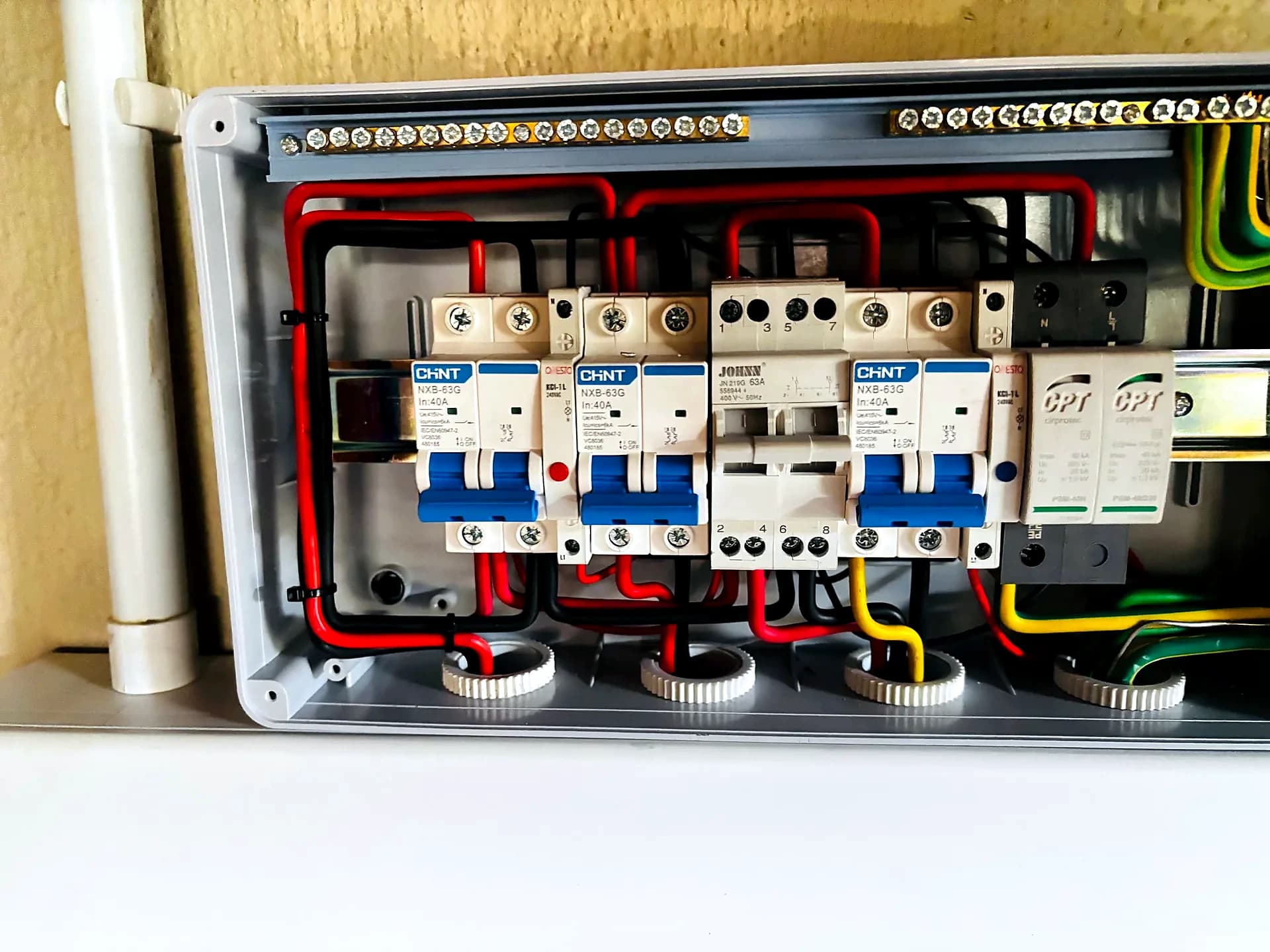
Solar sized on data, not guesswork.
A solar system is an electrical installation first. We start with your consumption figures, design the panels, inverter and battery around how you use power, then install, certify and register the system and set up monitoring from day one.
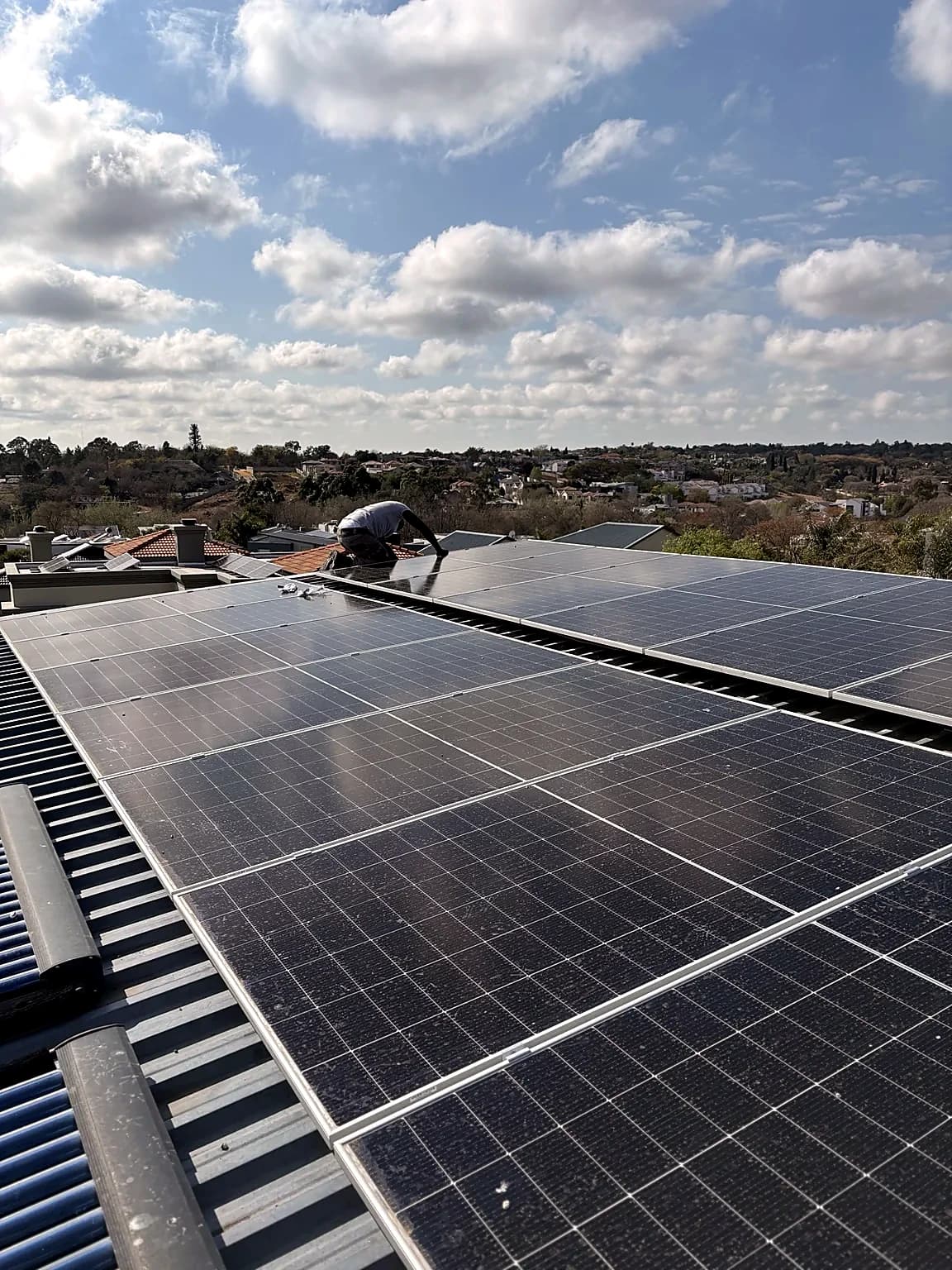
- Residential
- 3 – 16 kW hybrid systems
- Commercial
- 30 kW+ grid-tied & hybrid
- Paperwork
- COC + SSEG registration
- Financing
- Monthly payment option
What this covers
How a hybrid system fits together
During the day, solar charges the battery and runs the house at the same time. If the grid goes down, the inverter switches over in an instant and keeps the essential circuits running from the battery, while non-essential circuits are shed until power returns.
The power stays on where it matters.
A well-designed hybrid system switches to battery the moment the grid drops. We separate your essential circuits, size the battery for your measured evening usage, and set the system to recharge from solar first to keep your utility bill down.
Fast changeover on essential circuits
Battery sized from your measured evening load
Solar-first recharging to reduce grid usage
Remote monitoring & alerts included
How a typical project runs
Common questions
Hybrid, grid-tied or off-grid — which do I need?
Grid-tied saves money but switches off during load shedding. Hybrid adds batteries so critical circuits ride through outages. Off-grid removes the utility entirely, usually for farms and remote sites. We model all three against your consumption before recommending one.
How big a battery do I need?
Most homes need less than they are quoted. We measure your essential evening load and size the battery for the outage window you want to cover.
Do you handle municipal SSEG registration?
Yes. Small-Scale Embedded Generation registration is part of our commissioning scope, along with the COC for the installation.
Can I finance the system instead of paying upfront?
Yes. We arrange finance through a trusted provider and handle the application with you, then design and install the system ourselves. You pay one set monthly amount. See the Financing page for how it works.
Other services
Tell us what you need.
Send a few details and we'll come back with a clear answer: what it takes, what it costs and how long it needs.